Collingwood's history is written in its harbour, its architecture, and the grain terminals that still stand on the waterfront. The town did not begin as a resort destination or a retirement community. It was built as an industrial town, a place where ships were constructed, railways terminated, and goods moved between the Great Lakes and the cities to the south. That industrial past is the foundation of everything Collingwood has become, and understanding it gives the town a depth that is not immediately visible from the ski hills or the restaurant patios.
The story spans nearly two centuries, from the first surveys of the Georgian Bay shoreline to the closure of the shipyards, and from the arrival of the railway to the development of Blue Mountain as a ski resort. It is a story of boom and bust, of adaptation, and of a community that has reinvented itself more than once while maintaining a continuity of place and identity.
Founding and the Railway
Collingwood was founded in the 1850s as the terminus of the Ontario, Simcoe and Huron Railway, the first railway built entirely within what is now Ontario. The railway was designed to connect Toronto to the upper Great Lakes, and the southern shore of Georgian Bay was chosen as the northern endpoint. The location offered a natural harbour, protection from the worst of the lake's weather, and access to the shipping lanes that connected the upper lakes to the St. Lawrence Seaway and the markets of eastern Canada and beyond.
The town was named after Admiral Cuthbert Collingwood, a British naval officer who served alongside Lord Nelson at the Battle of Trafalgar. The choice of name reflected the maritime ambitions of the community from its earliest days. Within a few years of the railway's arrival, Collingwood had grown from a handful of buildings to a proper town, with hotels, shops, churches, and the beginnings of the harbour infrastructure that would define the community for the next century.
The railway connection was transformative. Goods and passengers could now travel from Toronto to Georgian Bay in a single day, a journey that had previously taken considerably longer by road. The railway made Collingwood a gateway to the upper Great Lakes, and the town grew rapidly as a result. Grain, lumber, and other commodities moved through the harbour, and the population grew to support the growing transportation infrastructure.
The Shipbuilding Era
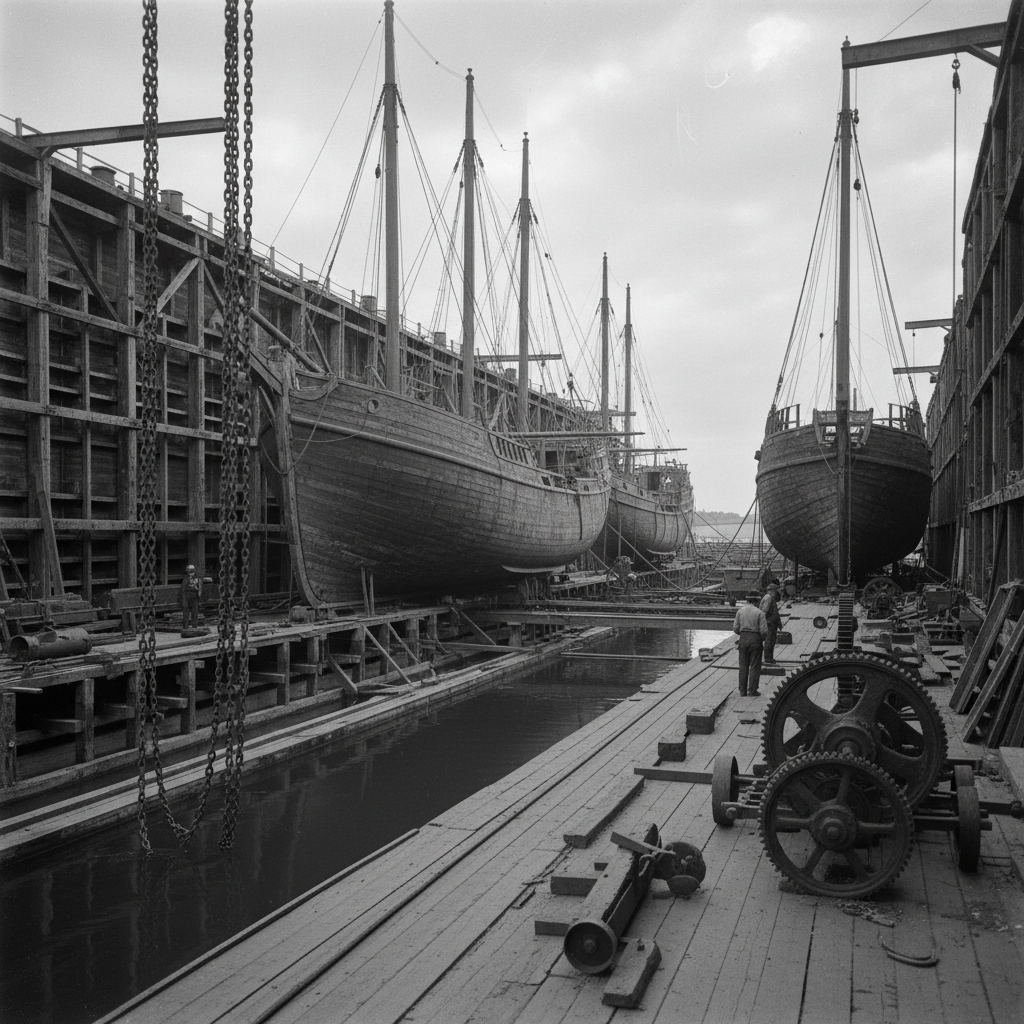
Shipbuilding became Collingwood's defining industry in the late 19th century and remained so for over a hundred years. The Collingwood Shipyards, established in 1883, grew into one of the largest shipbuilding operations on the Great Lakes. At their peak, the yards employed hundreds of workers and launched vessels that served the commercial shipping fleets of Canada and beyond.
The ships built in Collingwood ranged from bulk carriers that hauled grain and iron ore across the Great Lakes to passenger steamers that carried travellers between Georgian Bay ports. During both World Wars, the yards contributed to the war effort, building corvettes and minesweepers for the Royal Canadian Navy. The wartime production was a source of considerable pride for the community, and veterans of the yard work remain part of the town's collective memory.
The shipyards were more than an employer. They were the economic and social centre of the town. Workers lived in the neighbourhoods surrounding the yard, their families shopped on Hurontario Street, and the rhythms of the yard defined the rhythms of the community. Launch days, when a new ship entered the water for the first time, were community celebrations that drew crowds to the waterfront.
The Decline of Industry
The shipbuilding industry in Collingwood peaked in the mid-20th century and declined gradually in the decades that followed. Changes in Great Lakes shipping, competition from larger shipyards, and the broader shift in the Canadian economy away from heavy industry all contributed. The Collingwood Shipyards closed in 1986, ending over a century of continuous shipbuilding on the harbour. The closure was a significant blow to the town's economy and identity, and the years that followed were a period of adjustment.
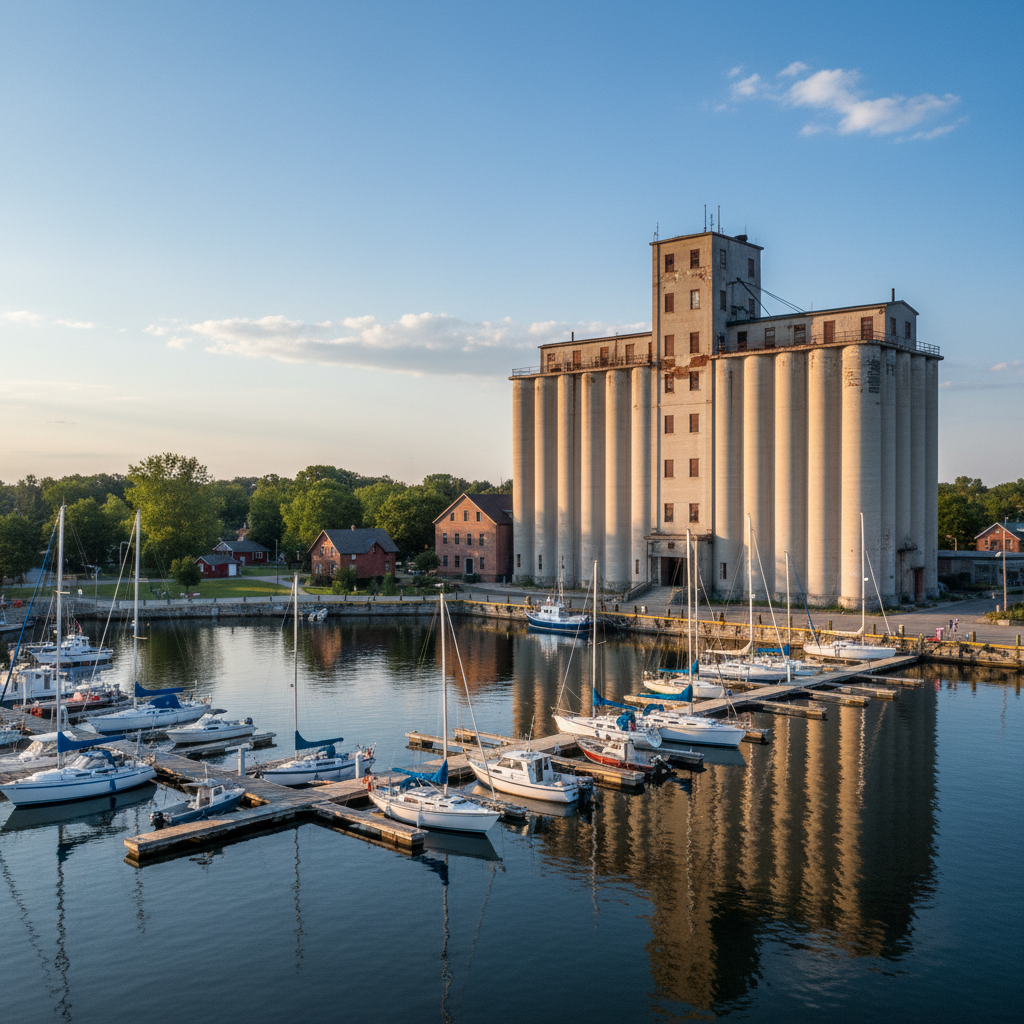
The grain terminals on the waterfront, which had been a central part of the harbour's commercial activity, also saw reduced traffic. The massive concrete structures remain standing today, a physical reminder of the scale of the industry that once drove the town's economy. There has been ongoing discussion about the future of the terminals, with proposals ranging from demolition to adaptive reuse, but for now they stand as landmarks that connect the present to the industrial past.
The Ski Town Transformation
Collingwood's reinvention as a four-season recreation destination began well before the shipyards closed, but it accelerated in the years afterward. Blue Mountain Resort had been operating since the 1940s, initially as a modest ski operation on the escarpment west of town. Over the decades, the resort grew in size and ambition, adding lifts, trails, snow-making infrastructure, and eventually the pedestrian village at the base that has become a year-round destination in its own right.
The resort's growth attracted investment in accommodations, restaurants, and services, and Collingwood began to develop a new economic identity centred on tourism and recreation. The proximity to Toronto, about 90 minutes by car, made the area attractive to weekend visitors and, increasingly, to people looking for a permanent or seasonal home outside the city. The restaurant scene grew, the arts community expanded, and the town's population shifted to include a more diverse mix of retirees, remote workers, young families, and lifestyle-oriented newcomers.
Heritage Architecture
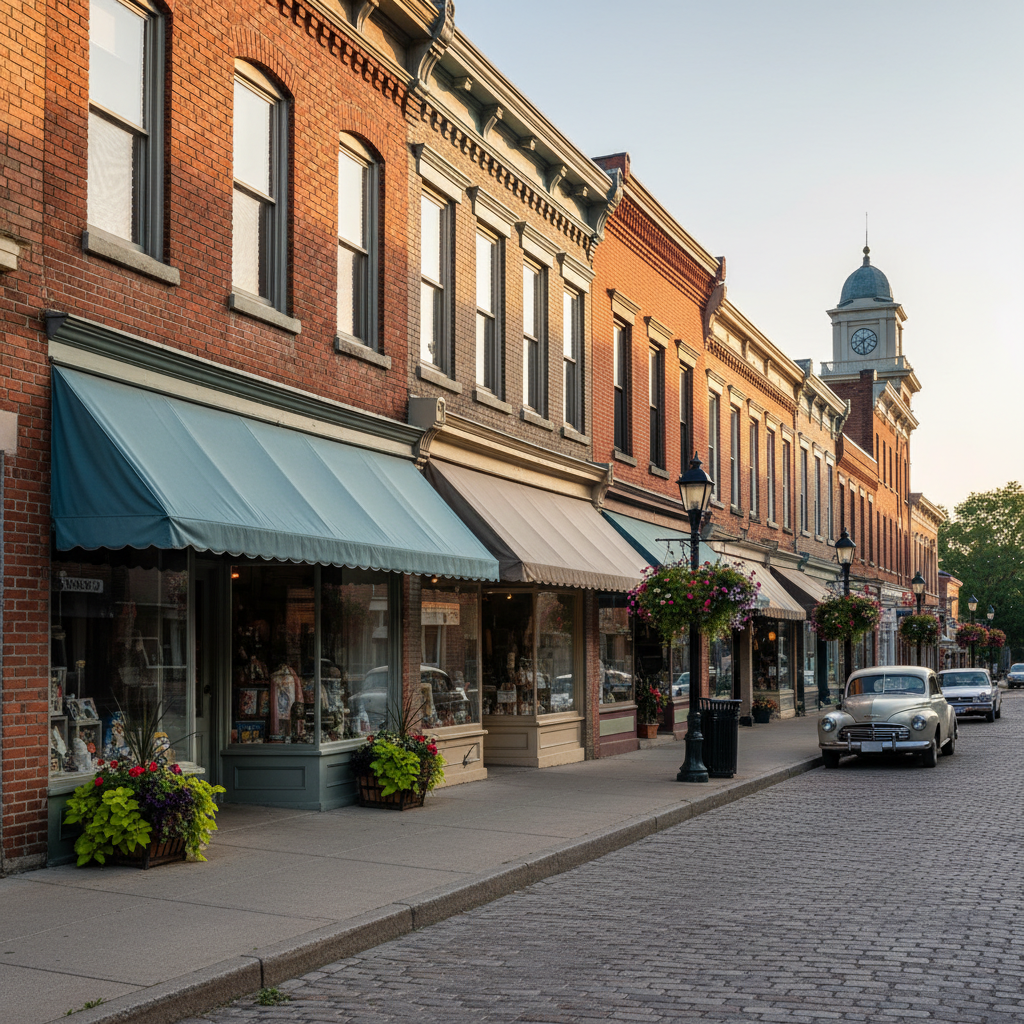
Collingwood's heritage architecture tells the story of the town's various eras. The downtown buildings along Hurontario Street date primarily from the late 19th and early 20th centuries, when the shipbuilding industry was at its height and the town was prospering. The facades are a mix of Victorian commercial architecture, with decorative brickwork, large display windows, and the kind of ornamental details that reflect the confidence of a community that expected to keep growing.
The residential neighbourhoods surrounding the downtown include a range of styles, from modest workers' cottages built for shipyard employees to larger Victorian homes built by the town's merchants and professionals. The Heritage District, roughly bounded by the downtown core, has been designated for its architectural significance, and many of the homes have been carefully restored.
The old railway station on St. Paul Street now houses the Collingwood Museum, which is the best place to learn about the town's history in detail. The station itself is a heritage building, and its preservation as a museum is a fitting use for a structure that was central to the town's founding story.
Collingwood Today
Modern Collingwood is a town that has found a new equilibrium. The industrial past is present in the harbour, the architecture, and the community's self-image, but the economy has diversified into tourism, recreation, retirement living, and the service industries that support them. The population has grown steadily, driven by the appeal of the natural setting, the quality of life, and the proximity to Toronto.
The town's story is not one of simple decline and rebirth. It is more nuanced than that. The shipbuilding heritage gave Collingwood a sense of identity and purpose that still informs the community. The transition to a recreation economy brought new energy and new residents. The challenge going forward is balancing growth with the qualities that make the town worth living in: the walkable downtown, the access to nature, the community connections, and the sense of place that history provides.
For a look at what the town offers today, the things to do guide covers the full range of activities. The events calendar includes events that celebrate the town's heritage alongside its contemporary culture.